Meet the Country Manager series: ST Foundation talks: René-Michel Munyembari (Burundi)
Welcome to the eighth edition of ST Foundation Talks, a series connecting you with the inspiring individuals leading ST Foundation initiatives around the world. In this series, we interview our dedicated Country Managers to learn more about their journeys, challenges, and the positive impact they are making in their communities.
Today, René-Michel Munyembari, our Country Manager for Burundi shares his story.
Can you tell us a little about yourself? Where are you from, and what’s your background?
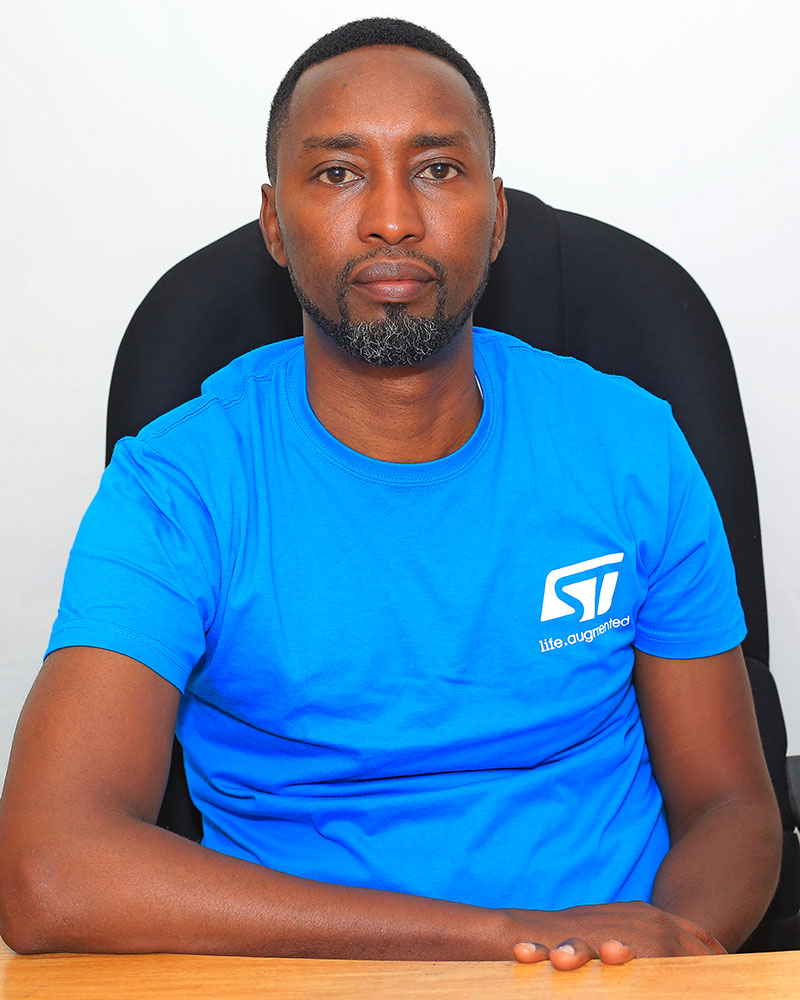 I was born in Burundi and I’m the seventh of ten children. My mother was a nurse, and my late father was a politician and diplomat. Because of his work, I studied in French schools in different countries, which really opened my mind and shaped how I see the world. Back in Burundi, I attended Lycée du Saint Esprit and later the University of Ngozi, where I earned a bachelor’s degree in industrial computer science and where I still live today.
Early in my career, I was Head of the Informatics Laboratory at Lycée Technique Alessandro Rossi. That’s where I met Pietro Fox and Mauro Decca from the ST Foundation. We spent time working together on different activities, and I was really inspired by the vision behind the Digital Unify Program. That’s what motivated me to join, and since 2012 I’ve been working as an IT consultant and serving as the local representative for the ST Foundation.
What does your role as a country manager involve?
As Country Manager, I’m responsible for overseeing the Digital Unify Program in all our centers in Burundi and making sure we operate in line with ST Foundation’s standards.
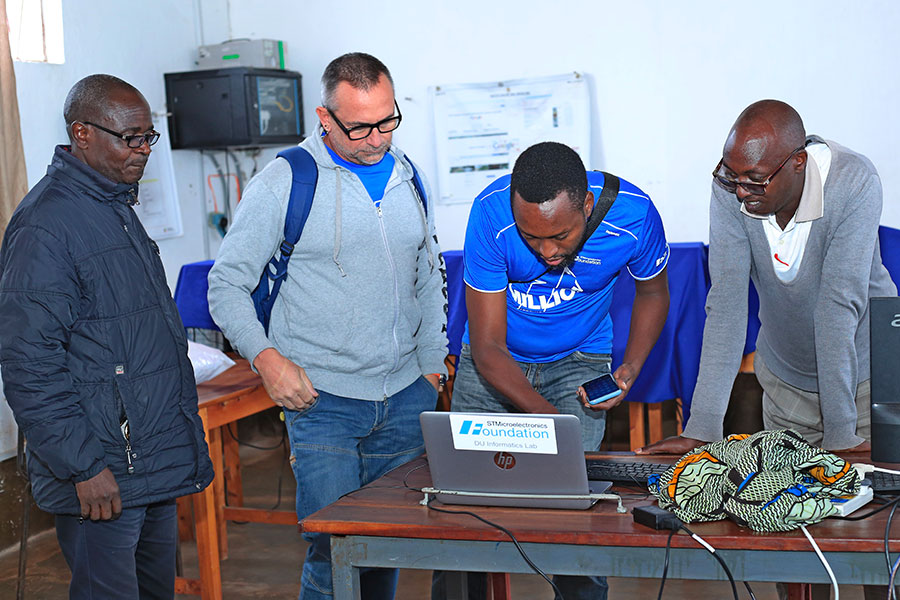
Day to day, I stay in close contact with our local trainers, mostly by phone, to follow what’s happening in their centers. I also visit at least four centers every month to see things on the ground and ensure that what we report reflects the reality.
Whenever there’s a technical issue — a computer that isn’t working, equipment that needs repair or replacement — I step in to help find a solution. So my role is really a mix of coordination, monitoring, and very practical, hands-on problem-solving.
What’s the most rewarding part of your work?
For me, the most rewarding part is hearing the stories of people whose lives have changed thanks to the program. When someone tells you that what they learned helped them move forward or opened new opportunities, it makes all the effort worthwhile.
 Can you share a memorable moment?
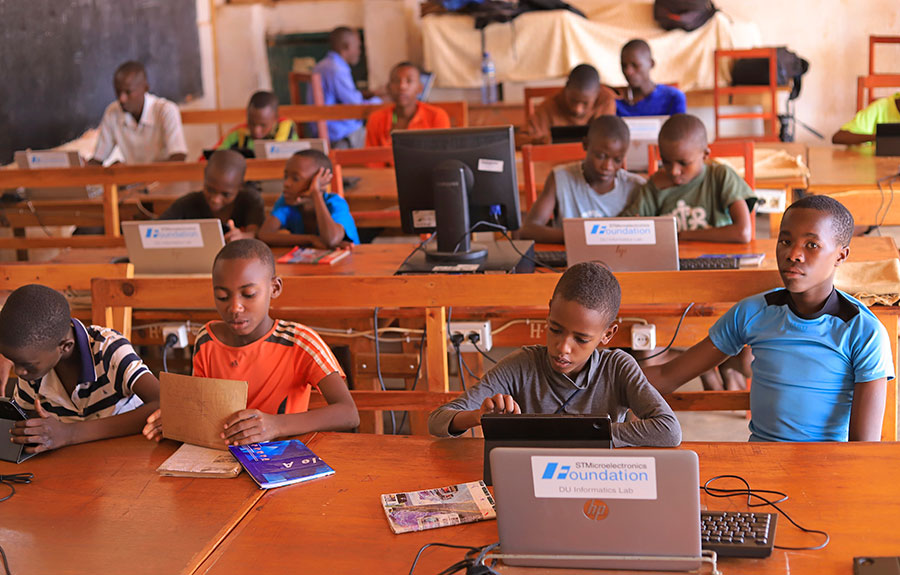
There’s one moment I’ll never forget. Years after my early days as an ICB trainer, I went to a small document services office to print some papers. The young woman at the desk greeted me very warmly and then told me I had been her ICB instructor.
Thanks to that course, she became confident with computers, kept learning, and eventually opened her own small business — the very office where I was standing. Today, she supports her family through that work.
That encounter really touched me. It reminded me that we’re not just teaching digital skills; we’re helping people build their future.
What challenges do you face?
One of the main challenges is Burundi’s economic situation, which makes it difficult to find local partners and resources to support or expand our activities. On top of that, internet connectivity is often unstable or too expensive, and that can limit what we’re able to offer in some centers.
Despite this, we stay optimistic. New connectivity solutions and technologies are slowly emerging, and we keep looking for creative ways to adapt so that people can still benefit from the program.
How do you connect with communities?Building strong relationships is key. I stay closely connected with trainers, local leaders, and community members, listening to their needs and working together to find practical solutions.
Trust and consistency really matter here—people need to see that we’re committed and present, not just passing through. By showing up regularly, keeping our promises, and adapting to local realities, we’re able to build meaningful, long‑term partnerships.
 What guides you in your work today and how do you see the future?
What motivates me is a simple mindset I try to live by: “When I’ve done my part of the job, whatever the result, I’m a winner.” It helps me stay focused on what I can control — giving my best — instead of being discouraged by challenges that are beyond my hands.
This is especially important when I think about the future. With global uncertainty and increasing pressure on NGOs and foundations, there’s always a concern that programs like ours could be affected.
But when I look at what we’ve already achieved, and at how strong the need still is in Burundi, I feel confident that the Digital Unify Program remains essential. As long as we keep doing our part, it will continue to make a real difference in people’s lives in the years ahead.
What do you enjoy outside work?
Outside of work, what I enjoy most is spending time with my wife and children. Whenever we have the chance to travel together, even for a short trip, it really helps me recharge and stay grounded.
Those moments with my family give me balance and remind me why my work matters. They are my greatest source of joy and motivation.