


From access to autonomy: a new chapter for the ST Foundation begins in Senegal
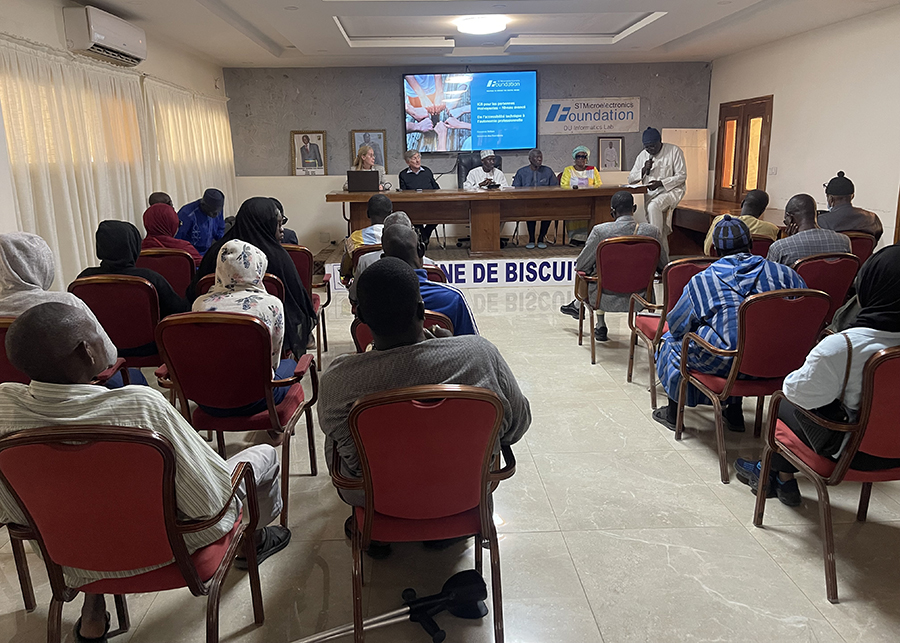
We officially launched the advanced computer course for the visually impaired at the Commune de Biscuiterie in Dakar on March 3rd, marking a new step in the evolution of its commitment to digital inclusion.
For the occasion, Giovanna Bottani, Chief Operating Officer of the Foundation, and Pietro Fox, Board Member, were present in Senegal to support this important milestone.
What took place that day went beyond the launch of a new program. It reflected the progression of a journey that has been steadily growing in both depth and impact.
This journey began in November 2022, in Thiès, with the launch of the Introduction to Computer Basics for Visually Impaired People (ICB4VI) program as a pilot initiative. Since then, it has evolved into a structured model, capable of expanding across countries and contexts. Through its partnership with the International Telecommunication Union, the program has moved from a local initiative to part of a broader international effort to strengthen digital inclusion.
Over time, one key lesson has emerged clearly: access to technology, while essential, is not enough. True inclusion requires more than access. It requires the ability to use technology with confidence, understanding, and purpose. The advanced course launched in Dakar has been designed precisely with this objective in mind. Developed with the continuous support of Cristian Bernareggi, it responds to evolving needs while aiming to unlock a deeper level of autonomy.
Because for a visually impaired person, digital skills are far more than technical know-how. They are a way to access, understand, and organize information; to turn complexity into clarity; and to transform opportunities into real possibilities.
In this landscape, artificial intelligence is a major turning point. No longer an abstract concept, it is becoming a concrete tool to support expression, enhance comprehension, and create new pathways for learning and participation. At the same time, it demands awareness, critical thinking, and a responsible mindset. Real autonomy does not come from technology alone. It comes from having the right skills and from being able to use digital tools thoughtfully and with clear intention.
As Giovanna Bottani highlighted during the launch:
“What we are building here is not just a training program. It is a pathway from access to mastery, from mastery to autonomy, and from autonomy to real participation. Because digital access is not a privilege. It is a condition to fully exercise the right to education and work.”
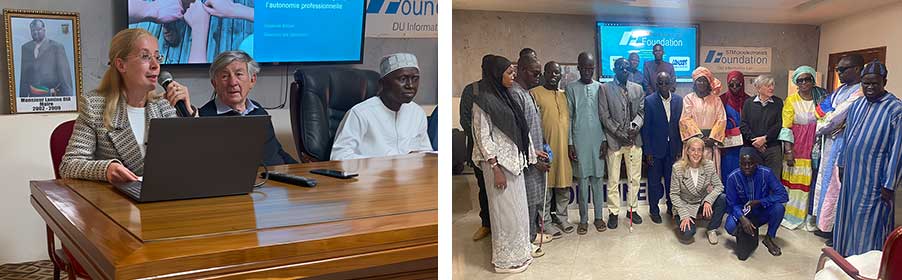
Before the launch, Cristian Bernareggi shared a reflection that resonates strongly with the ambition of the program: “If I had had access to these tools in the past, my experience of the world would have been profoundly different.”
This perspective captures what is truly at stake. Not simply the acquisition of new skills, but the possibility to shape a different future — one in which technology is no longer a barrier, but a lever for autonomy, dignity, and full participation.